Dermal Fillers
Are Dermal Fillers Safe? Risks, Side Effects & Safeguards
Dermal fillers are one of the most common aesthetic treatments, which is exactly why safety deserves a clear, honest answer. The short version is that fillers are generally well tolerated when the right product is placed in the right area by a trained medical injector, but they are still a medical procedure with real risks worth understanding. At True Bliss Medical, a physician-led med spa in Verona, NJ, Dr. Alexander Rios, MD takes a consultation-first, anatomy-based approach so patients across Essex County can make decisions with the full picture in front of them.
Are dermal fillers safe? A physician-led guide from Verona, NJ on real risks, side effects, and the safeguards that protect patients in Essex County.
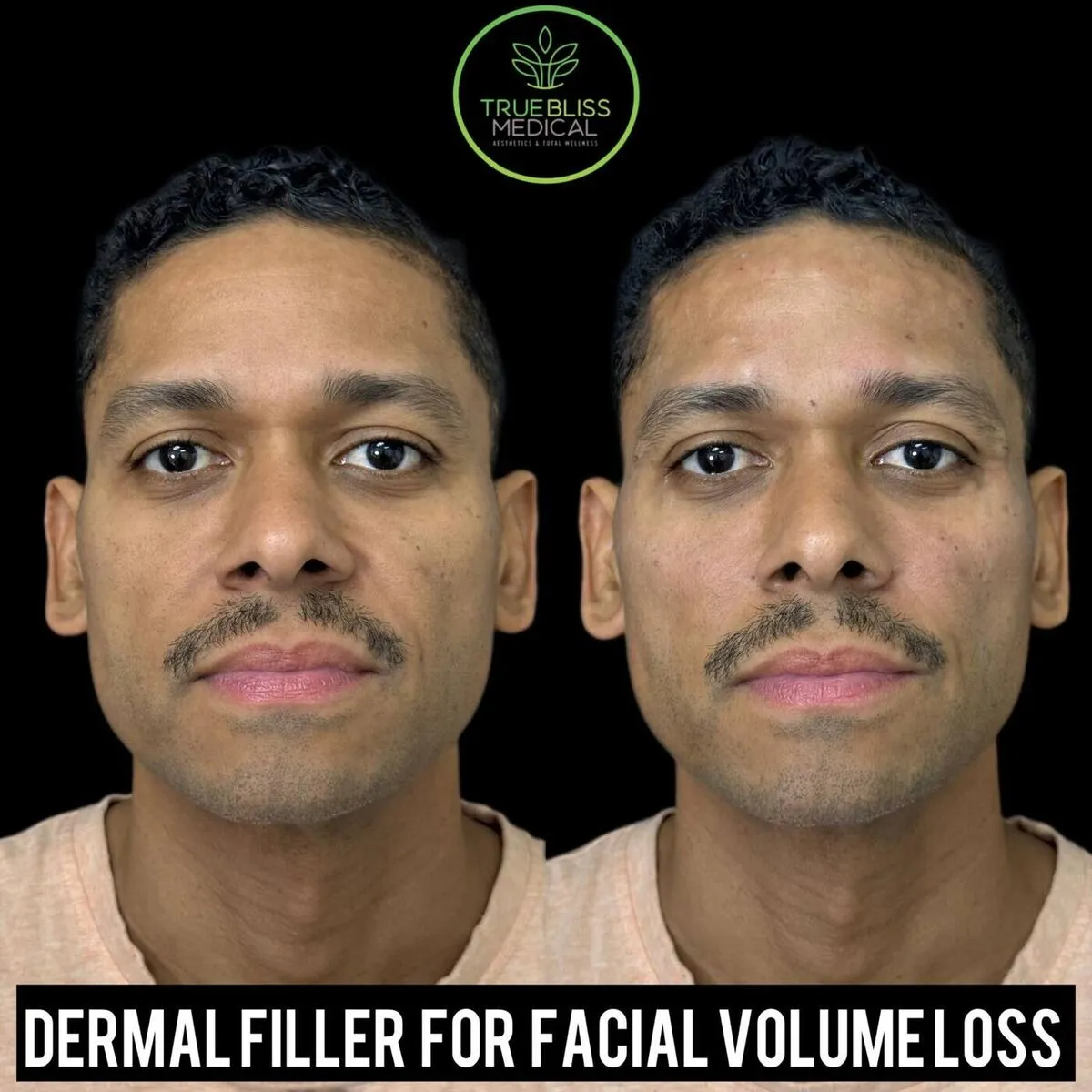
What "Safe" Actually Means With Dermal Fillers
Most dermal fillers used for the face are made of hyaluronic acid, a substance your body already produces. One practical advantage of these fillers is that they can often be dissolved with an enzyme called hyaluronidase if a correction is needed, which gives a trained provider an important safety tool that some other treatments do not offer.
Safety is never just about the product, though. It depends heavily on who is injecting, how well they understand facial anatomy, and whether the treatment plan actually fits your goals. The same syringe can produce a beautiful, natural result or an avoidable problem depending on the hands holding it.
That is why the most useful question is not only "are fillers safe" but "are they safe for me, in this area, with this provider." Those answers are worked out during a consultation, not assumed from an ad.
Common, Expected Side Effects
Most side effects after dermal fillers are mild, temporary, and part of the normal healing process. They typically show up right after treatment and settle within a few days to a couple of weeks. Knowing what is normal ahead of time makes the recovery far less stressful.
These reactions are usually a sign that your skin is responding as expected, not that something has gone wrong. Your provider should tell you which symptoms are routine and exactly when to reach out instead of waiting.
- Temporary swelling, especially in the first 24 to 72 hours
- Bruising at or near the injection points
- Mild tenderness, redness, or firmness in the treated area
- Small lumps or unevenness that often smooth out as swelling resolves
- Brief sensitivity that fades as the area settles
Rare but Serious Risks Worth Knowing
Serious complications from dermal fillers are uncommon, but they are real, and a responsible practice will never hide them from you. The most significant risk is a vascular occlusion, which happens if filler enters or compresses a blood vessel and interrupts blood flow to the skin or surrounding tissue.
This is precisely why anatomy training and conservative technique matter so much. A skilled medical injector knows where the vessels run, uses careful placement, and is prepared to act quickly if a problem appears. Time matters in these situations, and having hyaluronidase on hand to dissolve hyaluronic acid filler is part of being ready.
Certain areas carry more risk than others. Non-surgical rhinoplasty, sometimes called a liquid nose job, is an advanced, off-label use of filler in a high-risk vascular zone. It can be a good option for the right anatomy, but it should only be performed by an experienced medical injector who treats the risk seriously and never downplays it.
How a Physician-Led Approach Lowers Your Risk
At True Bliss Medical, treatment begins with a consultation and a facial assessment rather than a same-day rush to inject. Dr. Alexander Rios, MD brings a background in molecular biology and chemistry, a master's in biotechnology from Johns Hopkins University, a medical degree, and emergency medicine training, all of which shape a careful, safety-first mindset.
Anatomy-based injecting means each placement is planned around your individual features and the structures beneath the skin, with the goal of natural-looking results instead of an overfilled look. The aim is balance and refinement, not doing the most in a single visit.
A physician-led setting also means medical judgment is built in. Sometimes the safest, most honest recommendation is to use less product, choose a different area, or hold off entirely, and a consultation-first practice is set up to have that conversation with you.
Questions to Ask and Safeguards to Expect
You can protect yourself a great deal simply by asking good questions before any filler goes in. A trustworthy provider will welcome them and answer plainly, because an informed patient is a safer patient.
If a provider promises a flawless result, brushes off your risk questions, or pressures you to decide on the spot, treat that as a reason to slow down rather than speed up.
- Who is performing the injections, and what is their medical training?
- Which filler product is being used, and why is it right for this area?
- Is hyaluronidase available on-site in case a correction is needed?
- What side effects are normal, and which symptoms require urgent contact?
- Is this area or treatment genuinely appropriate for my anatomy and goals?
Aftercare That Supports a Safe Recovery
Good aftercare is part of a safe outcome, and most of it is straightforward. Your provider will give you specific instructions for your treatment, but a few general habits help most patients recover smoothly.
Just as important as the do's and don'ts is knowing how to reach the practice. You should leave your appointment understanding what is normal, what is not, and exactly how to get help quickly if you have a concern.
- Avoid heavy exercise, heat, and alcohol for the first day or so
- Skip pressure, massage, or facials on the area unless told otherwise
- Use cool compresses gently if you have swelling, as directed
- Be patient while swelling settles before judging your final result
- Contact the practice promptly if you notice unusual pain, color changes, or worsening symptoms
Fillers Within a Bigger Treatment Picture
Dermal fillers are one tool among many at True Bliss Medical, which serves Verona, Montclair, West Orange, Livingston, the Caldwells, Cedar Grove, Bloomfield, Nutley, Glen Ridge, and the greater Essex County and northern New Jersey area. Self-pay dermal fillers run about $650 to $750 per syringe, with final pricing confirmed at your consultation.
Depending on your goals, the right plan might combine or compare fillers with other treatments such as Botox, Jeuveau, or Xeomin for dynamic lines, masseter Botox for jaw concerns, microneedling, or a Tetra CO2 Cool Peel for skin quality. For some patients, broader goals are better supported by a physician-supervised GLP-1 medical weight loss program, with that plan and its pricing reviewed at consultation.
Because every face and every goal is different, results vary from person to person and no outcome is guaranteed. The point of a consultation is to map out what is safe, what is realistic, and what is actually worth doing for you.
About True Bliss Medical
True Bliss Medical is located in Verona, New Jersey, and serves patients throughout Essex County, including Montclair, Caldwell, West Caldwell, West Orange, Livingston, and Cedar Grove. Our practice focuses on advanced, physician-performed aesthetic treatments designed to enhance natural beauty without surgery.
Next step
If you are weighing dermal fillers and want a careful, honest assessment, book a consultation at True Bliss Medical in Verona, NJ, where Dr. Alexander Rios, MD will review your anatomy, goals, and safety questions before any treatment. Call (973) 498-8908 to schedule your visit.
Considering this treatment? Explore Dermal Fillers at True Bliss Medical in Verona, NJ.
Book a ConsultationContinue reading